
Reliable Structural Floors Built to Last
Basement Slabs in Radford and throughout Montgomery County for stable support beneath new construction and remodeling projects
Little River Concrete and Construction installs basement slabs for homeowners building new homes or finishing existing basements in Radford and throughout Montgomery County. You need a flat, structurally sound floor that can support finished living spaces, storage areas, or utility rooms without cracking or shifting over time. A properly poured basement slab provides the foundation for everything you plan to build or install on top of it, from partition walls to heavy appliances.
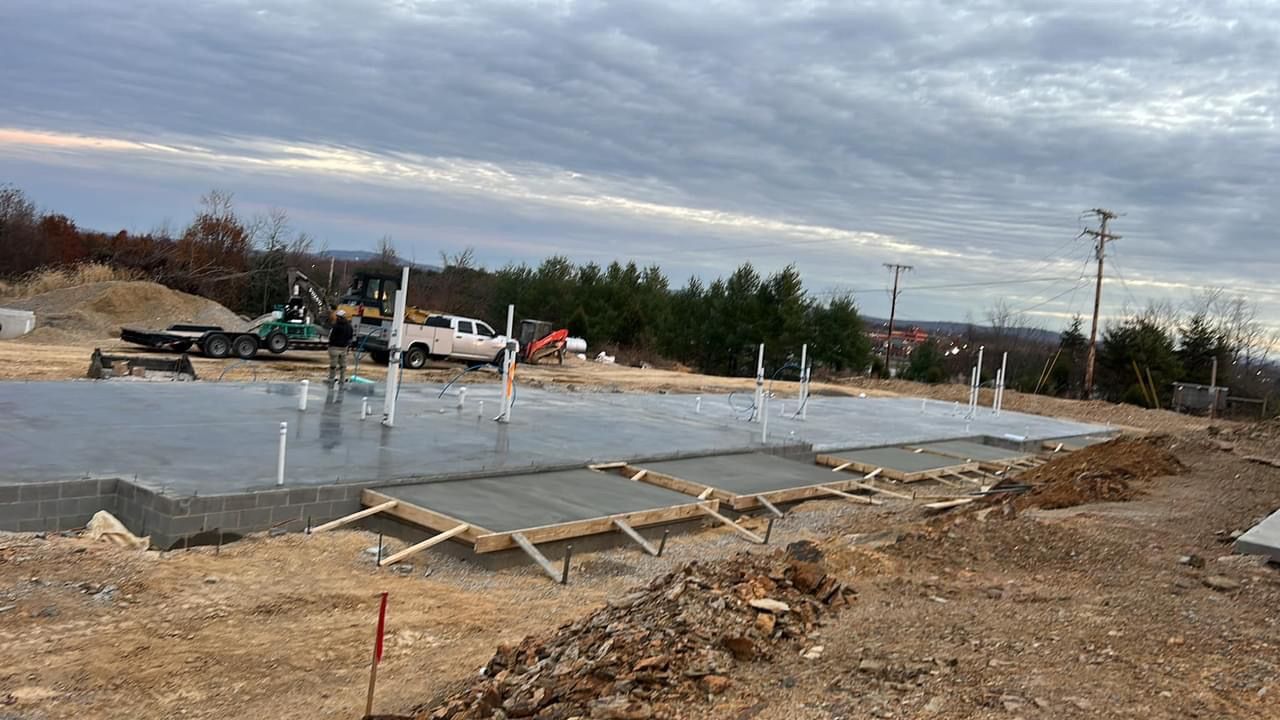
The work starts with site preparation that includes grading the base material to ensure stable support and prevent future settlement. Reinforced concrete is poured carefully to maintain a level surface throughout the basement footprint. Proper curing protects the slab from cracking caused by rapid moisture loss or temperature changes. When the work is complete, you have a solid, level floor ready for framing, insulation, or whatever comes next in your basement project.
If you are planning a basement remodel or building a new home in Radford or throughout Montgomery County, reach out to discuss site conditions and project timing.
What Happens Between Preparation and Final Finish
The crew begins by inspecting the excavated area and verifying that the base is compacted and free of debris that could create weak spots. A vapor barrier is laid to control moisture migration from the soil, and wire mesh or rebar is positioned to reinforce the concrete. The slab is poured in sections if needed, with each pour carefully leveled using screed boards and floats to achieve a uniform surface.
After the pour, you will see a smooth, flat floor that remains dimensionally stable as it cures. Little River Concrete and Construction monitors curing conditions to prevent surface cracking and ensures the slab reaches full strength before construction continues. The finished slab supports the weight of interior walls, flooring materials, and furnishings without deflection or movement.
The timeline depends on weather, site access, and the size of the basement. Curing typically requires several days before framing or other work can begin. The crew does not install finished flooring or handle plumbing and electrical rough-ins, but the slab is designed to accommodate those trades once it has cured properly.
Questions Homeowners Ask About Basement Floors
These questions come up often during planning and site visits in Radford and surrounding areas.
What thickness is required for a basement slab?
Most residential basement slabs are poured at four inches thick, with reinforcement added to handle the load from interior walls and furnishings without cracking.
How long does the concrete need to cure before framing starts?
You should wait at least three to five days before beginning framing, though full strength develops over several weeks depending on temperature and humidity.
Why is a vapor barrier necessary under the slab?
The barrier blocks moisture from the soil that would otherwise migrate upward and create dampness, mold, or damage to finished flooring materials.
How do you ensure the slab stays level across a large basement?
Laser levels and screed rails guide the pour, and the crew works in manageable sections to maintain consistent elevation and prevent low spots.
What happens if the ground beneath the slab shifts?
Proper compaction and base preparation prevent settlement, but if soil movement occurs later, it can cause cracking that may require repair or resurfacing.
If your basement project is ready for a slab pour or you need to evaluate site conditions before moving forward, contact Little River Concrete and Construction to schedule a consultation and review the scope of work.