
Structural Support That Starts Below Ground
Concrete Foundations in Radford and throughout Montgomery County for new construction and additions requiring stable, level bearing surfaces
Little River Concrete and Construction pours concrete foundations that provide the structural base for homes, garages, sheds, and additions where the building load must be transferred to undisturbed soil without settling or shifting. If you're starting new construction or adding square footage to an existing structure, the foundation is the critical first step that determines whether walls remain plumb, floors stay level, and doors continue to operate properly over the decades the building will stand.
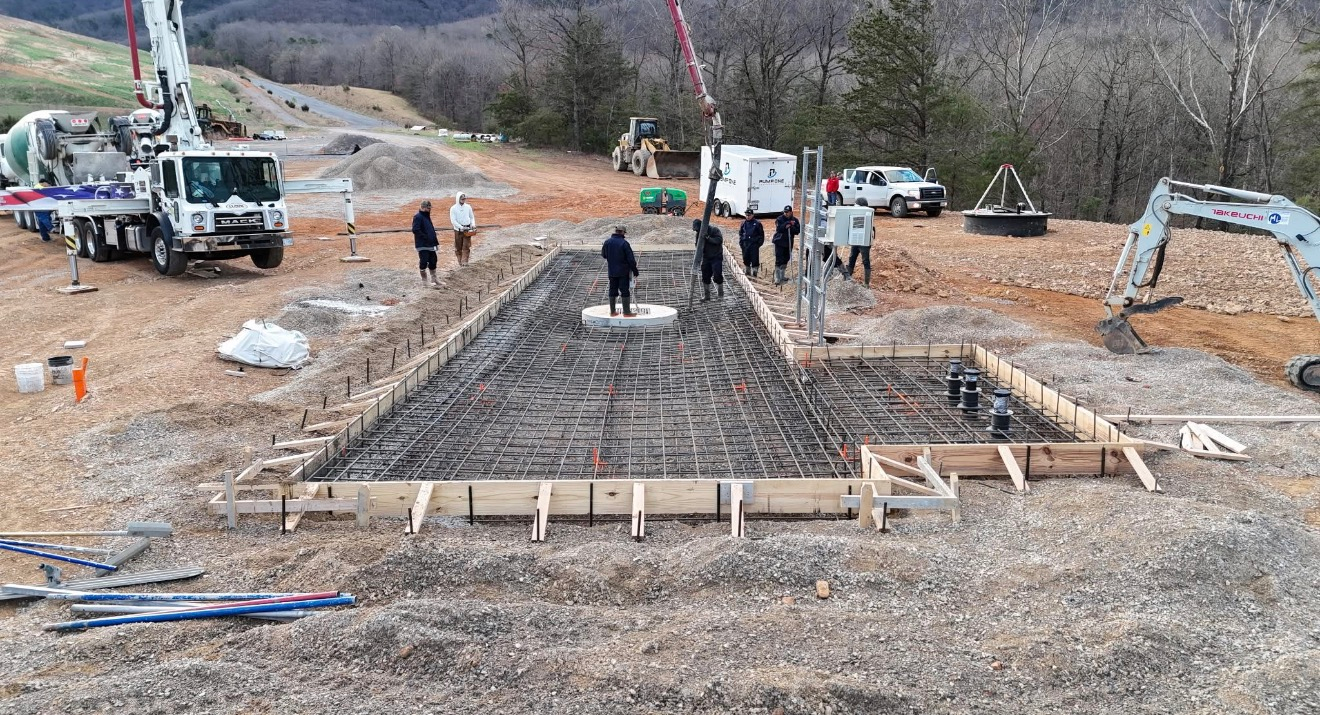
The process begins with excavation to reach stable soil below the frost line, followed by forming that defines the perimeter and thickness of the foundation walls or slab. Reinforcement is placed inside the forms, and concrete is poured in a continuous process to avoid cold joints that can weaken the structure. The crew works with surveyors or engineers to ensure the foundation is square, level, and positioned correctly on the lot. Attention to drainage, soil conditions, and local frost depth requirements ensures the foundation performs as intended without cracking or moving as the ground freezes and thaws.
If you're planning a building project that requires a new foundation, reach out to discuss site conditions, soil reports, and the type of foundation that suits your building design and budget.
Why Foundation Work Requires Precision
You need the foundation to be poured to exact dimensions and elevations because framing, roofing, and finishing work all depend on starting with a level, square base. Little River Concrete and Construction uses laser levels, string lines, and grade stakes to control pour height and ensure corners are square within tolerance. Reinforcement is positioned to resist cracking from lateral pressure, ground movement, and load from above, and the concrete mix is chosen for strength and workability in the conditions present during the pour.
After the foundation cures, you'll have a solid platform ready for framing. The surface will be level, anchor bolts or embedded plates will be positioned correctly for sill attachment, and any required openings for utilities or access will be formed accurately. The foundation resists settling because the crew compacted the base and poured against undisturbed soil, and it handles moisture because drainage was graded away from the perimeter during excavation. Building inspectors verify that the work meets code requirements for depth, reinforcement, and curing before framing begins.
Foundation types vary depending on building design and site conditions. Slab-on-grade foundations are common for single-story structures, while crawlspace and full-basement foundations require perimeter walls and footings. Stem wall foundations elevate the structure above grade and are used where drainage or site slope makes a full slab impractical. Each type requires different forming, reinforcement, and curing procedures, and the choice depends on your building plans and soil characteristics.
Questions About Foundation Installation
Builders and homeowners often ask about timing, soil conditions, and how the foundation connects to the rest of the construction process.
What depth is required for foundations in this area?
Footings are typically placed below the frost line, which in Radford and throughout Montgomery County is around 18 to 24 inches, to prevent heaving from freeze-thaw cycles that can crack or shift the structure.
How long does a foundation need to cure before framing starts?
Concrete reaches sufficient strength for light construction loads within seven days under normal conditions, though full curing continues for weeks, and inspectors verify readiness before framing begins.
Why is soil testing important before pouring a foundation?
Soil reports reveal bearing capacity, drainage characteristics, and the presence of expansive clay or unstable fill, all of which affect foundation design and the need for additional reinforcement or drainage measures.
How is drainage managed around a new foundation?
The crew grades the excavation to slope away from the foundation, installs perimeter drains if required, and backfills with gravel or compacted fill that directs water away from the concrete.
When is reinforcement added to a foundation?
Rebar or wire mesh is positioned inside the forms before the pour to resist cracking from ground movement and load distribution, and placement follows engineering specifications or local code minimums.
If you're ready to start a building project that requires a concrete foundation, contact Little River Concrete and Construction to review your site plan, schedule excavation, and coordinate the pour with your construction timeline.