
Defined Edges That Organize and Protect Property Borders
Concrete Curbs in Radford and throughout Montgomery County for driveways and parking areas needing water control and landscape separation
Little River Concrete and Construction installs concrete curbs that create durable boundaries along driveways, parking areas, and landscaped beds where you need to control water flow, prevent gravel migration, or define the edge of paved surfaces. If your driveway is losing stone into the lawn, water is washing soil onto pavement, or you're managing a commercial lot where parking areas need clear demarcation, curbing provides a raised barrier that directs runoff and keeps materials in place without requiring ongoing maintenance or replacement.
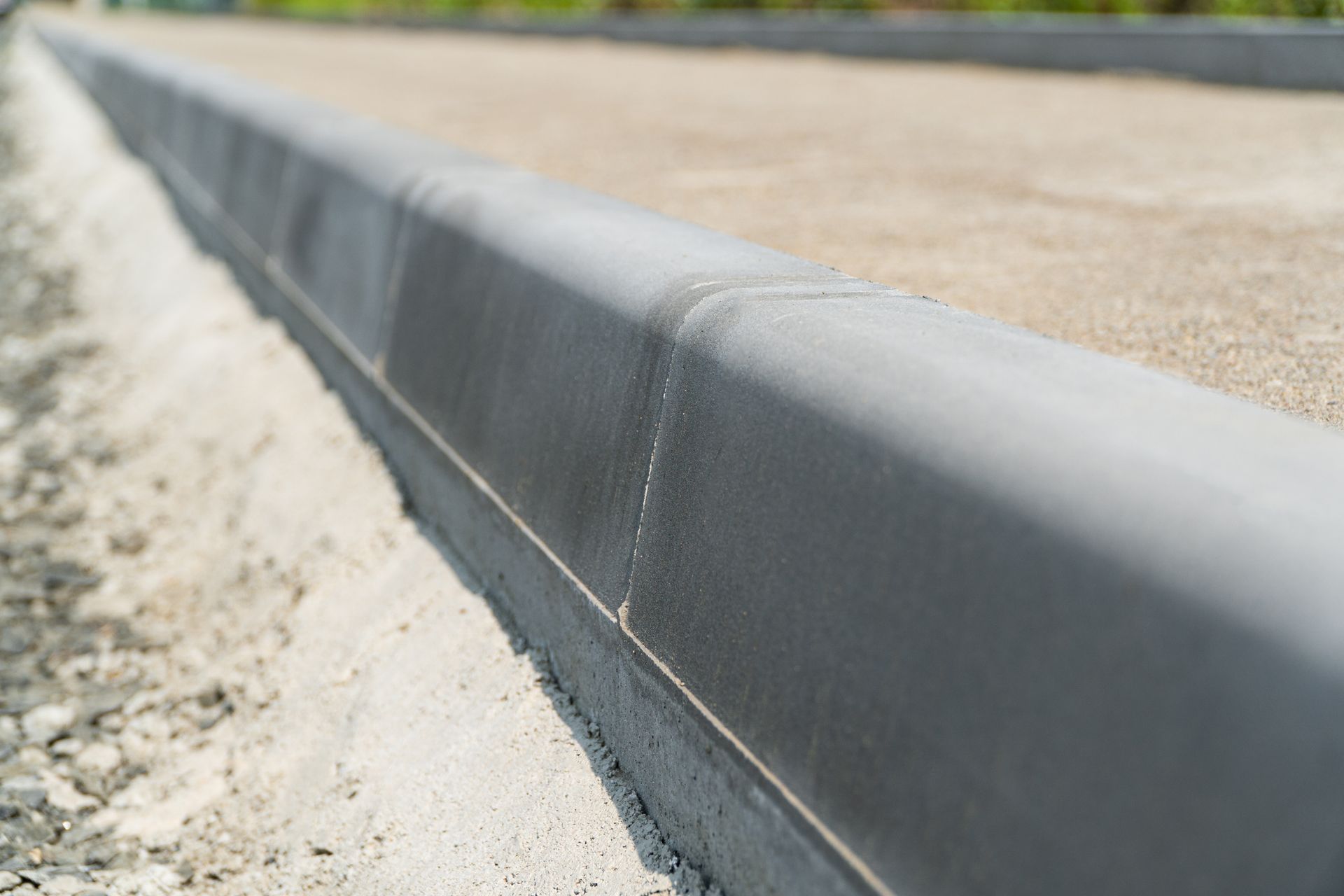
The work involves forming and pouring continuous concrete sections that follow the edge of the paved area or landscape border. Curbs are shaped to a consistent height and profile, typically with a rounded or angled face that sheds water and resists damage from vehicle contact. The crew grades the area before pouring to ensure the curb directs water toward drainage structures or away from buildings, and the concrete is reinforced to resist cracking from ground movement or impact. Properly installed curbing remains stable and functional for years without shifting or separating from the adjacent surface.
If your property needs curbing to manage drainage or define parking areas, reach out to discuss layout, height requirements, and how the curbs will integrate with existing pavement or landscaping.
What Curbing Adds to Your Property
You receive a permanent edge that keeps gravel, mulch, and soil contained while directing water away from structures and paved surfaces. Little River Concrete and Construction forms curbs to a height and profile that suits the application, whether that's a low border along a garden bed or a taller curb for a commercial parking lot. The crew positions the curbing to work with existing drainage patterns and ensures the top surface is smooth and consistent, which improves both function and appearance across the property.
After installation, you'll notice that water flows predictably along the curb line rather than spreading across pavement or pooling in low spots. Gravel and mulch stay in place, and the edge of your driveway or parking area remains clean and defined. The curbing resists damage from vehicle tires and holds up to seasonal freeze-thaw cycles without cracking or tilting away from the pavement. Homeowners and property managers often add curbing during driveway or parking lot projects to complete the hardscape layout and reduce long-term maintenance.
Concrete curbs are built to withstand the conditions they'll face, including vehicle contact, water flow, and ground movement. The installation accounts for expansion, drainage, and the load the curb will carry or deflect. Curbs can be poured with decorative profiles, stamped textures, or color if you want visual detail beyond a functional barrier, though these add to the scope and cost of the project. Standard curbing is designed to perform first and can be upgraded for appearance if that's part of your overall property plan.
Questions About Curb Installation
Property owners often ask about curb height, drainage benefits, and how the curbing connects to driveways, sidewalks, or parking surfaces.
What height is typical for driveway curbing?
Residential curbs are usually four to six inches tall, which provides enough height to contain gravel and direct water without creating a barrier that's difficult for vehicles to cross at designated access points.
How does curbing improve drainage?
The raised edge directs water along the curb line toward drainage inlets, swales, or lower ground, preventing runoff from spreading across pavement or washing soil and mulch into unwanted areas.
When should curbing be installed during a project?
Curbs are typically poured after the driveway or parking surface is in place so the crew can form against the existing pavement and ensure proper alignment and grade for projects in Radford and throughout Montgomery County.
Why do some curbs crack or separate from the pavement?
Cracking usually results from inadequate base preparation, missing reinforcement, or ground movement beneath the curb, all of which are addressed through proper excavation, forming, and curing during professional installation.
How are vehicle crossings managed with curbing?
The crew lowers or interrupts the curb at driveways and access points, often using sloped transitions or removable sections that allow vehicles to enter and exit without damaging the curb or vehicle undercarriage.
If you need curbing installed to manage drainage or define property edges, contact Little River Concrete and Construction to review your site, discuss curb profiles and placement, and schedule the work alongside other hardscape projects for efficiency.