
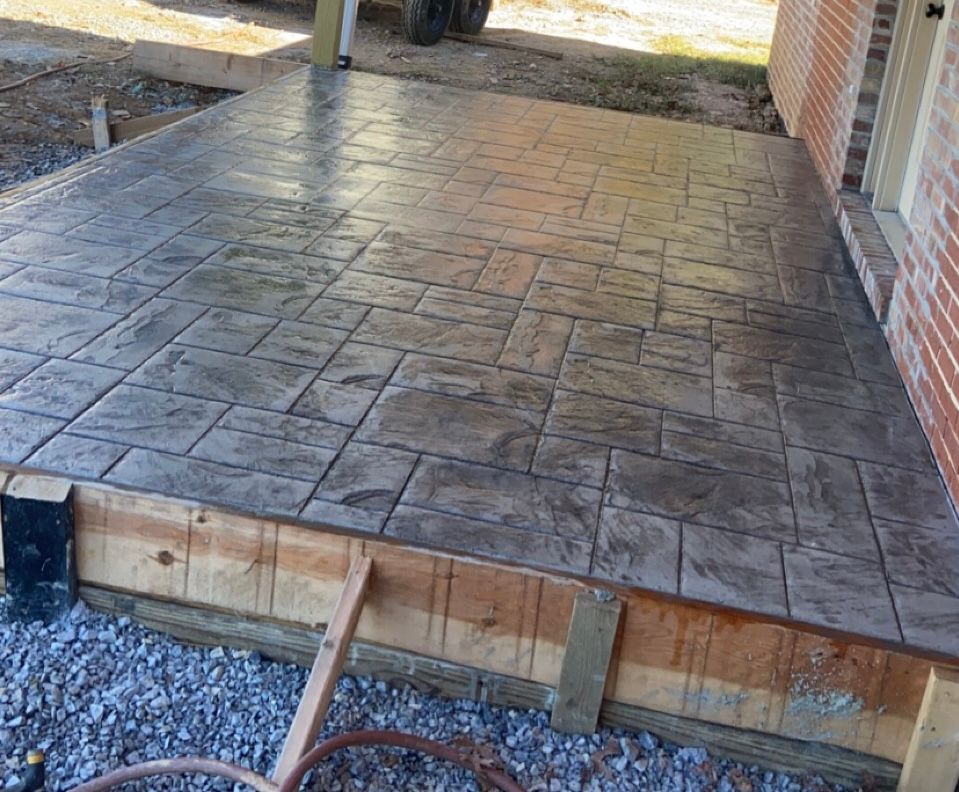
Textured Surfaces That Add Character to Outdoor Spaces
Decorative Concrete in Radford and throughout Montgomery County for patios and walkways needing visual interest beyond plain gray finishes
Little River Concrete and Construction installs decorative concrete that brings color, pattern, and texture to patios, front porches, pool decks, and walkways where you want the durability of a poured surface with the appearance of natural stone, brick, or custom tile. If your outdoor space feels unfinished or you're replacing a plain slab that doesn't match the design of your landscaping or home exterior, decorative finishes let you personalize the surface while maintaining the structural benefits of reinforced concrete.
Stamped concrete replicates the look of flagstone, slate, cobblestone, or wood plank by pressing textured mats into the surface before it fully cures. Acid staining creates color variations that range from earth tones to deeper hues, and because the stain reacts chemically with the concrete, the color penetrates the surface rather than sitting on top like paint. Both methods are applied during or immediately after the pour, and the result is a finished surface that handles foot traffic, weather exposure, and seasonal temperature changes without fading or peeling the way coatings can.
If you're planning a new patio or want to upgrade an existing outdoor area, reach out to discuss pattern options, color samples, and how decorative treatments integrate with your property layout.
How Decorative Finishes Are Applied
You start with the same base preparation and forming used for standard concrete work, but after the slab is poured and leveled, color hardeners or release agents are applied to the surface. Stamping mats are pressed into the concrete to create the desired texture, and edges are detailed by hand to ensure patterns align and look intentional rather than repetitive. Acid stains are applied after the concrete has cured, and the surface is sealed to protect the finish and deepen the color.
After the work is complete, your patio or walkway will have visible texture and color depth that plain concrete doesn't offer. The surface feels solid underfoot, drains properly, and resists cracking when installed with control joints and proper reinforcement. Little River Concrete and Construction matches the pattern and color to your home's exterior materials or landscaping stone, so the decorative concrete feels like a deliberate design choice rather than an afterthought. Homeowners often use decorative finishes for entertainment areas, front entries, or outdoor kitchens where the surface is visible and needs to hold up to regular use.
Sealing is required to protect the stain and maintain the appearance of stamped textures, and resealing every few years keeps the surface looking consistent. The concrete itself remains durable, but the decorative layer benefits from routine maintenance. Custom borders, inlaid patterns, or multiple color zones can be added during installation if you want additional detail, though these increase both labor time and material costs.
What Homeowners Want to Know About Decorative Concrete
Questions typically focus on how the finish holds up over time, whether it can be applied to existing slabs, and how color and pattern choices affect the final look.
What is the difference between stamped concrete and acid staining?
Stamping adds physical texture that mimics stone or brick, while acid staining changes the color of the concrete through a chemical reaction, and both can be combined on the same surface for added depth.
How long does the color last on decorative concrete?
Color from acid stains or integral pigments remains visible for years, though sealing the surface protects against fading from UV exposure and wear, and resealing maintains the original tone.
When should decorative concrete be sealed?
The surface is sealed shortly after installation once the concrete has cured, and resealing is recommended every two to four years depending on traffic and weather exposure in Radford and throughout Montgomery County.
Why does stamped concrete sometimes look artificial?
Poor pattern alignment, repetitive mat placement, or lack of color variation can make the finish look uniform and fake, which is avoided by varying stamp positioning and using multiple color tones during application.
How does decorative concrete compare to pavers or natural stone?
It costs less to install, provides a continuous surface without weed growth between joints, and requires less maintenance, though it doesn't offer the same individual stone appearance or modularity for repairs.
If you're considering decorative concrete for a patio, walkway, or porch, contact Little River Concrete and Construction to review your site, discuss finish options, and schedule the work during favorable weather conditions for curing and staining.