
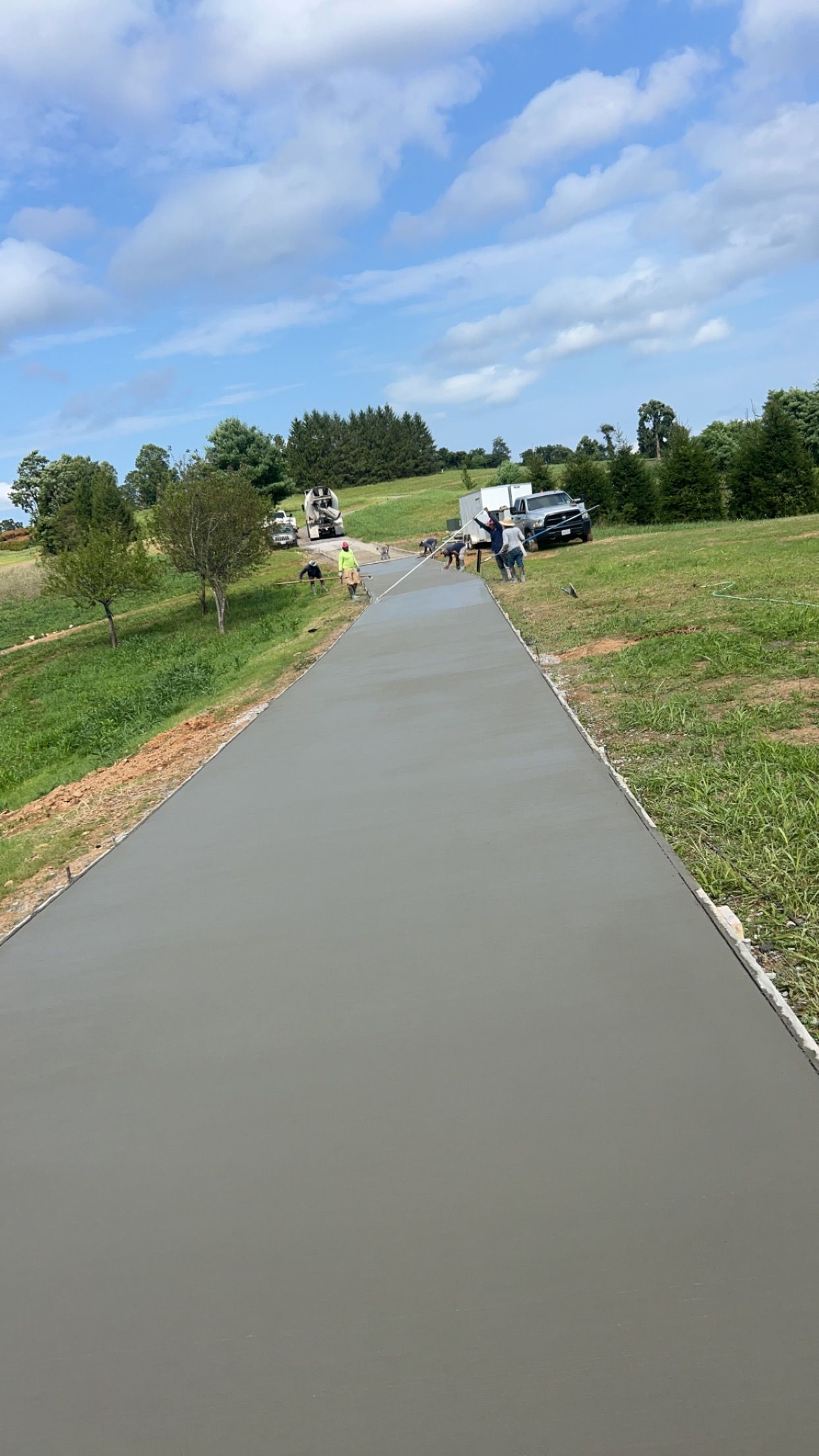
Durable Surfaces That Handle Daily Vehicle Loads
Concrete Driveways in Radford and throughout Montgomery County for properties replacing cracked, sunken, or failing asphalt and gravel drives
Little River Concrete and Construction installs concrete driveways that provide a smooth, reinforced surface for parking and vehicle access where older asphalt has deteriorated or gravel drives have become rutted and difficult to maintain. If your current driveway has developed potholes, drainage problems, or sections that have settled lower than the garage floor, a concrete replacement eliminates those issues with a surface designed to carry vehicle weight and resist seasonal movement without requiring annual resurfacing or stone replenishment.
The installation begins with removing the old surface and excavating to establish a stable base of compacted gravel that drains properly and supports the concrete slab. Forms are set to control width, thickness, and slope, and reinforcement is added before the pour to prevent cracking under load. The concrete is finished with a broom texture that provides traction in wet conditions, and control joints are cut to manage natural expansion and contraction. Proper grading ensures water flows away from the garage and foundation rather than pooling on the driveway or running toward the house.
If your driveway needs replacement or you're adding a new surface for a detached garage or additional parking, reach out to discuss site grading, access for equipment, and how the new driveway will connect to the street or existing pavement.
What Makes a Concrete Driveway Last
You need a driveway that stays level, drains properly, and doesn't crack apart under the weight of daily use. Little River Concrete and Construction pours driveways at a thickness suited to the load they'll carry, typically five to six inches for residential use, and uses wire mesh or rebar to reinforce the slab. The crew grades the base to direct runoff away from structures and ensures the driveway slopes gently toward the street or a drainage swale. Control joints are spaced to control where cracks form, keeping them narrow and uniform rather than random and wide.
After installation, you'll notice a smooth, stable surface that doesn't shift or develop ruts when you drive over it. The driveway stays functional in wet weather because water doesn't pool on the surface, and it resists damage from freeze-thaw cycles that cause asphalt to crack and gravel to wash away. Homeowners often schedule driveway work alongside sidewalk or patio projects to create a cohesive hardscape layout, and because concrete cures to full strength within weeks, the surface is ready for regular use without requiring ongoing maintenance or patching.
Concrete driveways perform well in changing seasonal conditions common in this region. They handle snow removal without gouging, resist oil stains better than asphalt, and don't require seal coating. Decorative borders, exposed aggregate finishes, or colored concrete can be added if you want visual detail, but these are not included in standard installations. The driveway is built to be functional first, with appearance options available as upgrades.
Common Driveway Questions
Property owners often ask about thickness, drainage, and how the new driveway will connect to the street or garage floor.
What thickness is needed for a residential driveway?
Most driveways are poured at five to six inches thick over a compacted gravel base, which provides adequate strength for cars, trucks, and occasional delivery vehicles without overbuilding the section.
How is water managed on a concrete driveway?
The surface is sloped during installation to direct runoff toward the street, lawn, or drainage structures, preventing pooling that can undermine the slab or create ice hazards in winter months in Radford and throughout Montgomery County.
When can vehicles use the driveway after pouring?
Light vehicle traffic is possible within seven days under normal curing conditions, though heavy loads and sharp turns should be avoided for at least two weeks to prevent surface damage.
Why do some driveways crack while others remain intact?
Cracking typically results from inadequate base preparation, missing control joints, or ground movement beneath the slab, all of which are addressed through proper excavation, reinforcement, and joint placement during professional installation.
How does the driveway connect to the garage floor or street?
The crew forms or saw-cuts a clean edge where the driveway meets existing concrete or asphalt, then pours against that edge to create a stable transition without creating a lip or separation that develops into a trip hazard.
If you're ready to replace a failing driveway or install a new surface, contact Little River Concrete and Construction to schedule a site review, discuss layout and grading, and coordinate the work with your schedule and weather conditions.