
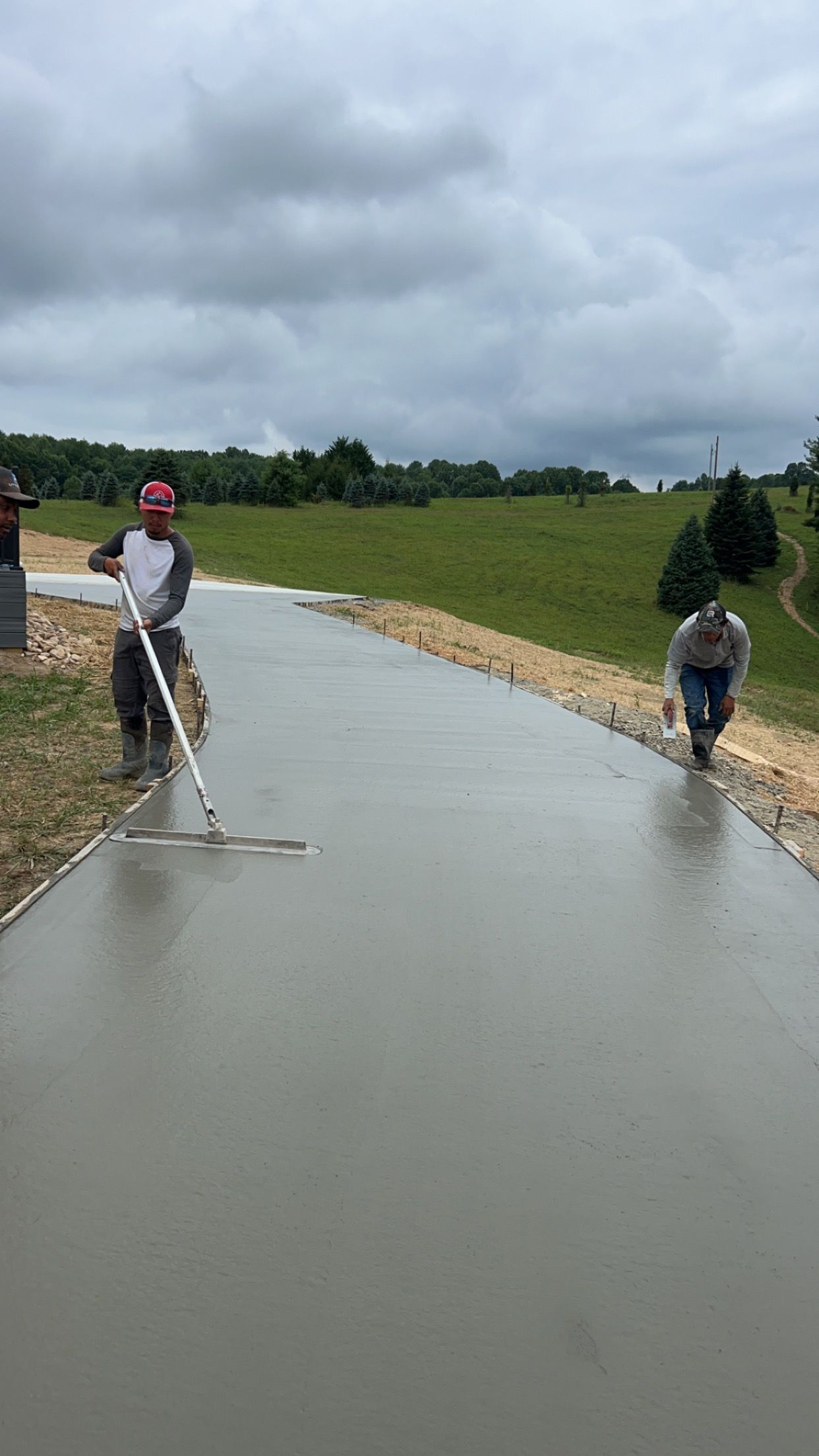
Safe and Stable Walkways Built to Last
Concrete Sidewalks in Radford and throughout Montgomery County for properties needing reliable access and reduced tripping hazards
Little River Concrete and Construction installs concrete sidewalks that create defined, durable pathways between your home and the street, around your building perimeter, or through landscaped areas where foot traffic has worn uneven trails through the grass. If you're managing a property where visitors or tenants are walking across unpaved ground or navigating cracked sections that tilt toward the foundation, a professionally poured sidewalk corrects those problems with a surface designed to carry weight and shed water without settling.
The work begins with excavation and grading to establish a base that drains away from structures and remains stable under seasonal freeze-thaw cycles common in this region. Forms are set to control width and thickness, and reinforcement is added before the pour to resist cracking under load. Once the concrete is placed, it's finished smooth or with a light broom texture to prevent slipping when the surface is wet. Proper site preparation ensures the walkway remains level and functional for years without requiring continuous patching or releveling.
If your property needs a new walkway or replacement sections that eliminate uneven surfaces, reach out to discuss site conditions and layout options that work with your existing grade.
What You Gain From Professional Installation
You receive a walkway that handles daily foot traffic without developing low spots where water collects or edges that crack away from the slab. Little River Concrete and Construction uses proper base compaction and control joint placement to manage natural movement in the concrete, which reduces the likelihood of random cracking and extends the functional life of the installation. The crew works with your existing landscape and drainage patterns to position the sidewalk where it serves the intended route without creating new runoff problems.
After installation, you'll notice a clean, defined path that stays accessible in wet weather and doesn't require sweeping away gravel or dealing with mud tracked indoors. The surface remains stable underfoot, and because the concrete is poured to consistent thickness with reinforcement, it resists the kind of settling that causes sections to tilt or separate. Homeowners often pair sidewalk work with driveway or patio projects to create a unified hardscape layout that improves both appearance and function across the property.
Concrete sidewalks are built to withstand the conditions they'll face, including vehicle crossings at driveway aprons, heavy foot traffic near entrances, and seasonal temperature swings. The installation accounts for expansion, drainage, and the load the surface will carry. Decorative borders, stamped edges, or color variations are not included in standard installations but can be added if you want visual detail beyond a functional walkway.
Common Questions About Sidewalk Installations
Homeowners and property managers often ask about thickness, base preparation, and how the new walkway will connect to existing concrete or asphalt surfaces.
What thickness is used for residential sidewalks?
Your sidewalk is typically poured at four inches thick with a compacted gravel base beneath it, which provides the necessary strength for foot traffic and occasional vehicle crossings without overbuilding the section.
How is drainage managed along the walkway?
The crew grades the base so water flows away from building foundations and toward lawn areas or existing drainage paths, preventing pooling that could undermine the slab or create ice patches in winter.
When can the sidewalk be used after pouring?
You can walk on the surface within 24 to 48 hours under normal conditions in Radford and throughout Montgomery County, but full curing takes several days, and heavy loads or vehicle traffic should be avoided during that period.
Why do some sidewalks crack while others remain intact?
Cracking usually results from inadequate base preparation, missing control joints, or ground movement beneath the slab, all of which are addressed during professional installation through proper excavation, compaction, and joint placement.
How does the new section connect to an existing driveway or porch?
The crew saw-cuts or forms a clean edge where the sidewalk meets existing concrete, then pours against that edge to create a stable transition that doesn't separate or create a tripping hazard over time.
If you need a sidewalk installed or damaged sections replaced, contact Little River Concrete and Construction to schedule a site visit and review the layout, grade, and any site-specific drainage considerations that affect the installation.