
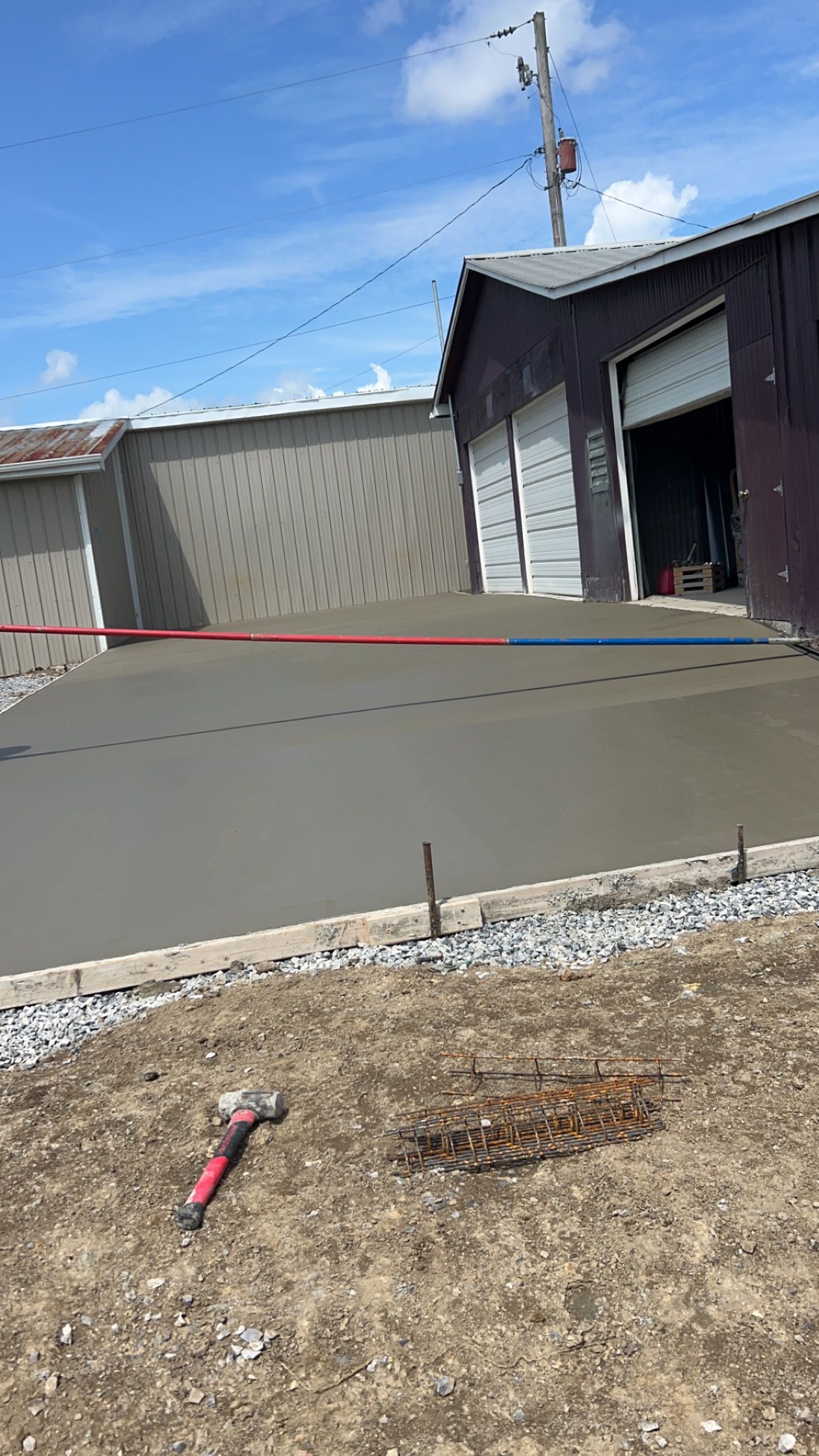
Durable Floors That Support Vehicles and Equipment
Garage Slabs in Radford and throughout Montgomery County for detached garages, workshops, and attached structures under construction
Little River Concrete and Construction pours garage slabs for homeowners building new garages, workshops, or storage buildings in Radford and throughout Montgomery County. You need a concrete floor strong enough to handle the weight of vehicles, toolboxes, workbenches, and other heavy equipment without cracking or settling. A properly installed garage slab provides a stable base for the structure above and a smooth, level surface for daily use.
The process begins with grading and compacting the base material to prevent future movement. Reinforcement is placed to distribute loads evenly across the slab, and the concrete is poured to a thickness that supports vehicle traffic and heavy storage. Finishing work includes troweling the surface smooth and controlling the curing process to avoid shrinkage cracks. Once complete, the slab is ready for wall framing and garage door installation.
If you are planning a garage build or shop addition in Radford or throughout Montgomery County, get in touch to discuss site conditions and schedule the pour.
From Base Preparation Through Final Troweling
The crew starts by verifying that the excavated area is level and properly compacted, removing any soft spots that could lead to settlement. A gravel base is spread and compacted to provide drainage and support, then wire mesh or rebar is positioned to reinforce the slab. Forms are set to define the slab edges, and the concrete is poured and spread evenly across the area.
After the pour, you will notice a flat, smooth surface with no dips or high spots that could interfere with vehicle entry or equipment placement. Little River Concrete and Construction uses bull floats and power trowels to achieve a consistent finish, and the slab is allowed to cure under controlled conditions to reach full strength. The result is a garage floor that remains stable under load and resists wear from tires, tools, and weather exposure.
Typical garage slabs require a few days of curing before construction can continue, though you should avoid driving heavy vehicles on the surface for at least a week. The crew does not install garage doors, electrical wiring, or wall framing, but the slab is designed to support those elements once the building is enclosed.
Common Questions About Garage Floors
Homeowners in Radford and throughout Montgomery County often ask these questions when planning a garage slab installation.
What thickness is needed for a garage slab that will hold vehicles?
A standard residential garage slab is poured at four to six inches thick, with reinforcement to handle the weight of trucks, SUVs, and heavy equipment.
How do you prevent the slab from cracking over time?
Wire mesh or rebar is embedded in the concrete, and control joints are cut to direct minor cracking along planned lines rather than randomly across the surface.
Why is proper base preparation important for a garage floor?
A compacted gravel base prevents soil settlement and allows water to drain away from the slab, reducing the risk of voids forming beneath the concrete.
How long before you can drive on a new garage slab?
Light foot traffic is safe after a few days, but you should wait at least seven days before parking vehicles to allow the concrete to develop adequate strength.
What if the garage is on sloped terrain?
The excavation and base work are adjusted to create a level building pad, and drainage is planned to direct water away from the slab and foundation walls.
When your garage project is ready for a concrete floor, reach out to Little River Concrete and Construction to review the site and coordinate the installation timeline.