
Stabilizing Slopes and Managing Elevation Changes
Retaining Walls in Radford and throughout Montgomery County for properties with sloped terrain and erosion concerns
Little River Concrete and Construction builds retaining walls for homeowners in Radford and throughout Montgomery County who need to manage elevation changes, prevent soil erosion, or create usable outdoor spaces on sloped land. You need a structure that holds back soil pressure, directs water away from vulnerable areas, and remains stable through seasonal freeze-thaw cycles. A properly engineered retaining wall turns unusable hillside into terraced garden beds, level patios, or stable driveways.
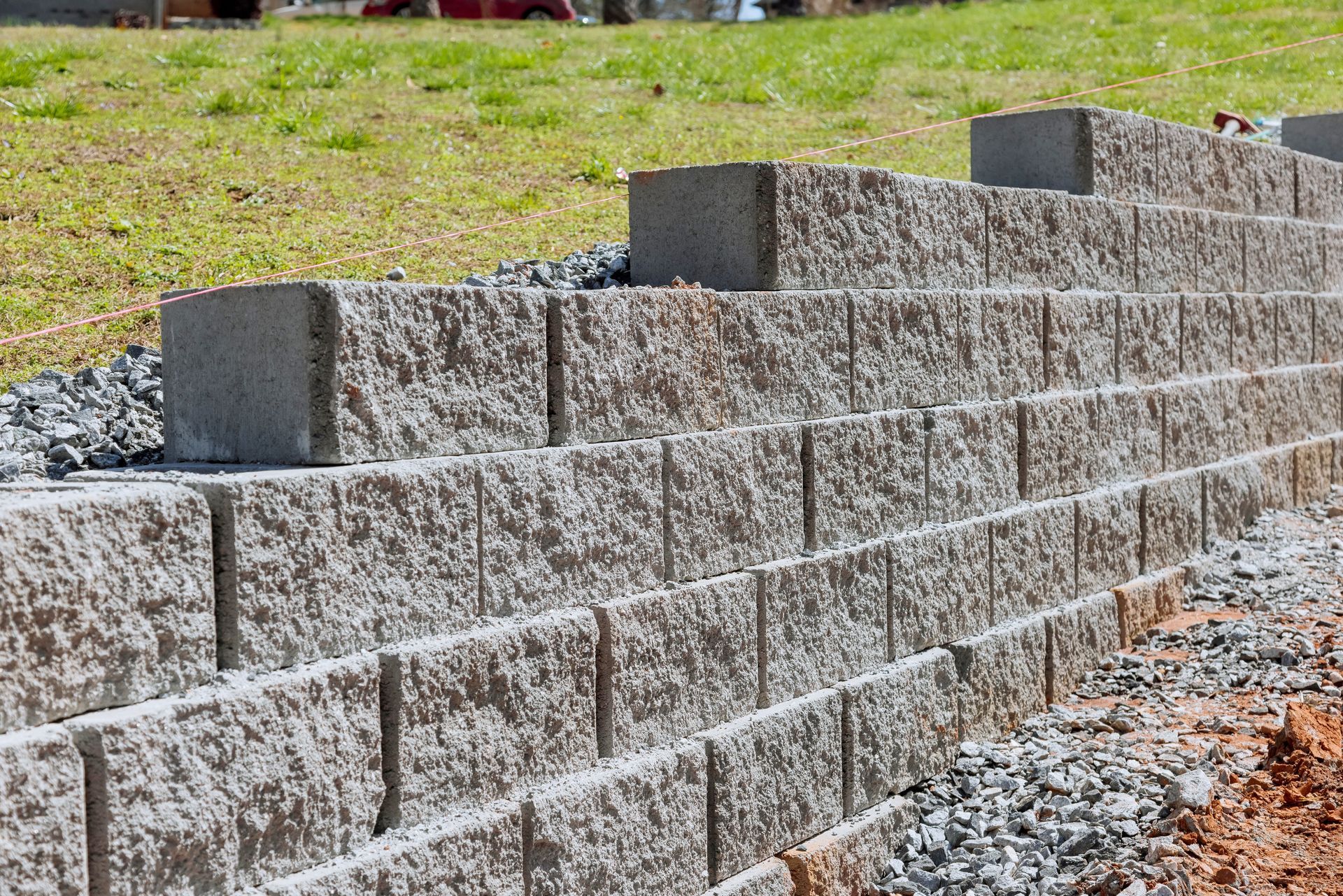
The work begins with excavating the area and preparing a stable base that can support the weight of the wall and the soil behind it. Drainage systems are installed to prevent water buildup that would undermine the wall over time. The wall is built in lifts, with reinforcement and backfill added as each section is completed. Once finished, the wall holds the slope in place and allows you to landscape or build on the newly leveled ground.
If you are dealing with erosion or planning to terrace your property in Radford or throughout Montgomery County, get in touch to discuss site conditions and wall design.
Engineering and Building Walls That Hold
The crew starts by evaluating the slope and soil type to determine the appropriate wall height, thickness, and reinforcement. A trench is excavated below grade to provide a stable footing, and a gravel base is compacted to allow drainage. Blocks, poured concrete, or other materials are set in courses, with each layer checked for level and alignment before the next is added.
After installation, you will notice that the slope no longer shifts or erodes, and the ground above the wall remains level and stable. Little River Concrete and Construction installs drainage pipes and weep holes to direct water away from the wall, preventing hydrostatic pressure that could cause bulging or failure. The finished wall provides long-term support and opens up space for planting, seating, or additional construction.
Wall height and length determine whether engineering calculations or permits are required, and local building codes may specify setbacks or drainage standards. The crew does not install irrigation systems or plantings, but the wall is designed to work with landscaping plans once the structure is in place.
Questions About Building and Maintaining Retaining Walls
Homeowners in Radford and throughout Montgomery County frequently ask these questions when planning retaining wall projects.
What causes a retaining wall to fail?
Poor drainage, inadequate footing depth, or insufficient reinforcement can allow water pressure or soil movement to push the wall out of alignment or cause cracking.
How tall can a retaining wall be built without engineering?
Walls under four feet in height often do not require formal engineering, but local codes in Radford and surrounding areas may have specific limits depending on site conditions.
Why is drainage critical behind a retaining wall?
Water that collects behind the wall adds pressure that can cause bulging, tilting, or collapse, so drainage pipes and gravel backfill are used to direct water away.
What materials are used for residential retaining walls?
Options include poured concrete, concrete blocks, stone, and timber, with each material offering different aesthetics, costs, and structural characteristics.
How long does it take to build a retaining wall?
Timelines vary based on wall length and height, but most residential walls are completed within a few days to a week, including excavation and backfill work.
If your property has slope issues or you are planning to terrace outdoor space, contact Little River Concrete and Construction to review the site and outline a wall design that fits your needs.